A roster gap is not always as simple as someone calling in sick and leaving a shift uncovered. It may be a rejected shift, a late change, a missed clock-in, availability that no longer matches the roster, or a site that repeatedly becomes difficult to cover.
The immediate response may still be to find someone else and maintain the service. But the gap itself can also tell you something.
Short-notice disruption is normal in guarding operations. People get sick, availability changes and unexpected events occur. One exception does not automatically point to a wider problem. Repeated gaps, late identification or the same types of disruption occurring around particular sites, shifts or workers can start to reveal trends in workforce availability, communication and the way information is moving through the operation.
The difference is whether those trends are being identified in time to respond.
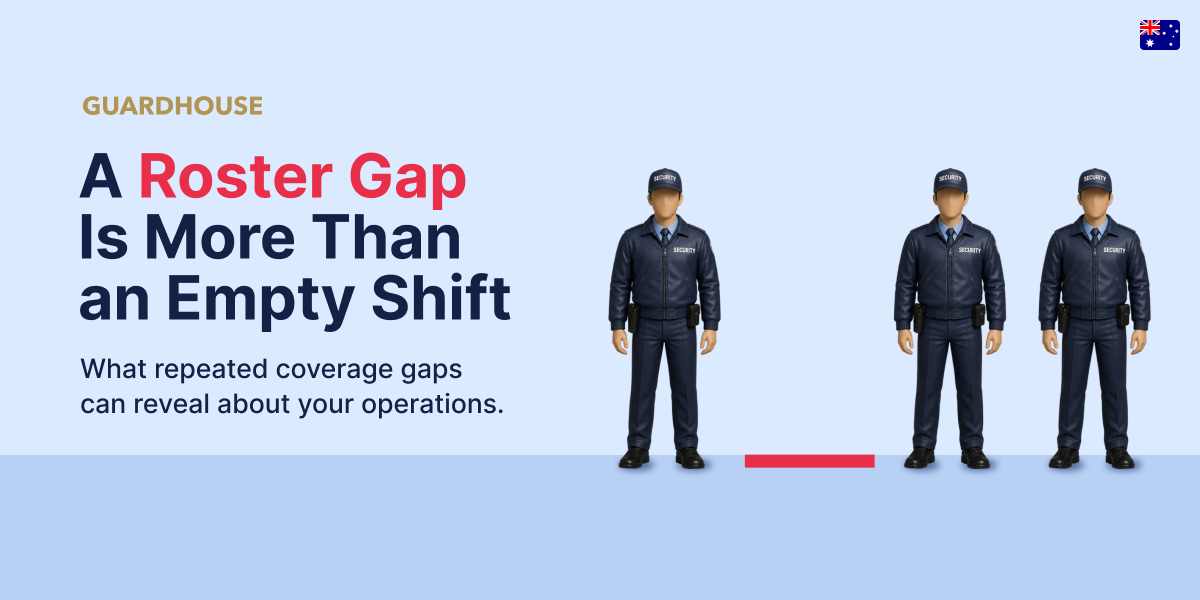
A Gap Is More Than an Empty Shift
The first priority when a shift becomes uncovered is service continuity. The shift still needs to be covered, the client still expects coverage and operations may have little time to respond.
Once the immediate issue is managed, there is value in understanding what happened.
Was the worker unavailable but the roster had not been updated? Was a shift changed without the information reaching the right person? Did the worker reject the shift? Was there a missed clock-in? Is the site consistently difficult to cover? Is the same small group of employees repeatedly being called on to solve last-minute problems?
None of these questions assumes poor performance by the worker or the operations team. They help separate a routine exception from something that may warrant closer review.
That distinction matters because guarding businesses can become very good at solving individual roster problems without noticing that they are solving the same problem over and over again.
A replacement may be found every time, but repeated manual intervention still takes up time and can place additional pressure on dependable staff.
A gap that gets filled is operationally resolved. A pattern that goes unnoticed is not.
What Operations Can See Changes the Response
The real test is whether roster exceptions are being surfaced to the operations team promptly enough to act on them. An unfilled or rejected shift, a late roster change or attendance that does not match the published roster should not sit unnoticed until someone happens to find it.
Once an issue is visible, the next question is how quickly it is acted on. Operations may need to identify a suitable replacement, confirm site requirements, communicate the change and make sure the revised deployment is understood.
Just as importantly, the information should not disappear once the shift is covered. Recording what changed, when it was identified and how often similar exceptions occur helps managers distinguish a one-off disruption from an emerging trend.
Published shifts, staff availability, attendance status, clock-in information and confirmed or rejected shifts can each provide part of that picture. The value comes from being able to view those pieces together rather than relying on separate spreadsheets, inboxes, messages or phone calls.
Guardhouse can bring rostering, staff availability, shift status and time and attendance information into a more connected view, helping operations identify when the planned roster and actual activity no longer match.
The value lies in having that information while there is still time to act on it. A manager who can spot a problem before it becomes a client issue has more choices. They can establish what has changed, identify an appropriate replacement, confirm whether site-specific requirements apply and communicate with the people affected. That is a different operating position from discovering the issue after the service has already been interrupted.
Repeated Gaps Can Reveal Wider Pressure
Individual exceptions become more useful when enough connected information is retained for recurring issues to become visible.
A single sick call is normal. Several late changes affecting the same site are worth reviewing.
One worker becoming unavailable is routine. A small group repeatedly carrying extra coverage may indicate that the available workforce is narrower than the roster suggests.
A missed clock-in may be a phone issue or a simple oversight. Repeated differences between rostered attendance and actual clock-in information may warrant a closer look at communication, attendance processes or how the site is being managed.
Patterns can also have a human side.
Some sites or shift patterns may consistently be harder to cover, while the same reliable employees gradually become the default response to short-notice gaps. Supervisors may also spend more time filling shifts manually as those pressures repeat.
These trends do not prove the cause, but they give managers something to review. When roster, availability and attendance information are connected, it becomes easier to distinguish a temporary disruption from a workforce or site issue that may need attention.
This is where Guardhouse’s operational reporting and connected workforce records become useful. The aim is not to eliminate every absence or unexpected change. It is to make recurring pressure easier to recognise before it becomes normal practice.
For security providers, that can support better decisions about workforce availability, site allocation, supervisor workload and service continuity.
Five Questions to Ask When a Shift Changes
When a shift changes unexpectedly, these questions can help determine whether the issue is simply a one-off or something that deserves further attention:
- Was the gap identified in time to respond properly? Check when the issue became visible and whether operations had reasonable time to arrange coverage.
- Is the reason for the change or absence known? Understanding what happened helps distinguish normal disruption from recurring communication or availability issues.
- Is a suitable replacement actually available? Filling the shift should still account for the worker, site and any relevant assignment requirements.
- Does actual attendance match the published roster? Time and attendance or clock-in information can help confirm whether the planned deployment occurred.
- Is this happening repeatedly? Look for recurring issues involving the same site, shift pattern, timing or reliance on the same replacement staff.
Because Guardhouse brings rostering, staff availability, shift status and time and attendance information together, several of these questions can be answered from one place rather than across separate systems.
Guarding operations will never be free from roster disruption. Sickness, changing availability and unexpected events are part of managing a live workforce.
The more useful question is not whether every gap can be prevented. It is whether the business can see what is happening soon enough to respond, understand when isolated events are becoming a pattern and act before recurring pressure affects service delivery.
A roster gap may begin as an empty shift. Managed well, it can also be useful information.